
Tax leadership is no longer limited to merely compliance, reporting, and regulatory issues. Tax executive leaders who are able to understand technology, work alongside other departments such as finance and law, and make general business decisions are what companies need. However, identifying a candidate with these qualities can prove to be difficult. The conventional hiring process may be able to find competent tax people, but not necessarily good leaders.

What Is a Hybrid Tax Leader?
A hybrid tax leader has not only extensive tax expertise but also skills that touch upon technology, finance, law, and strategic business thinking. The position does not presuppose that a single individual needs to know everything about all the areas mentioned. Rather, effective leaders need to comprehend the interaction between the areas and communicate with them successfully.
For example, a senior tax executive may need to work with finance on forecasting, legal teams on transactions and regulatory matters, and technology teams on tax automation, data systems, and reporting processes. As tax functions become increasingly connected to broader business operations, this ability to work across departments has become more valuable.
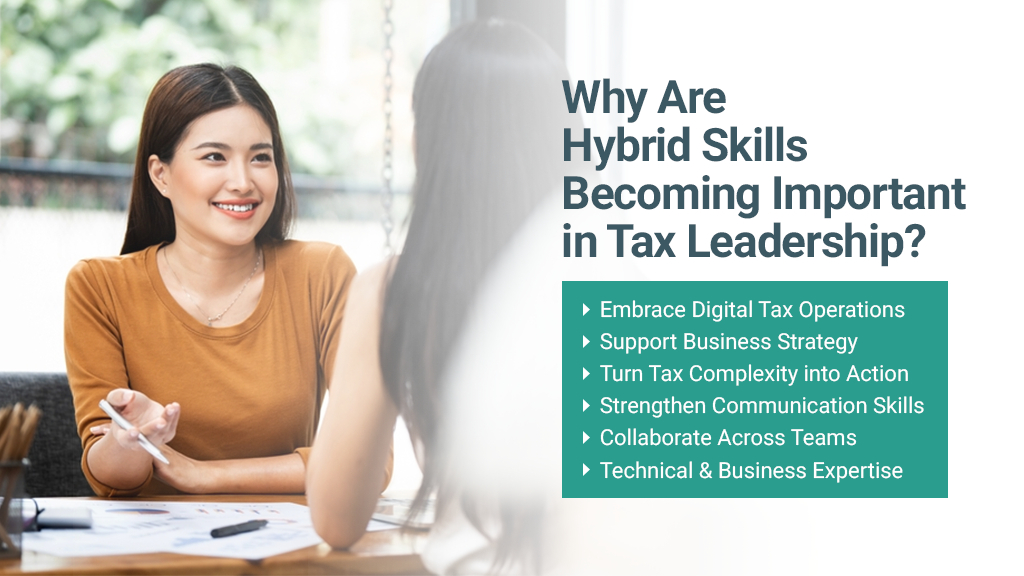
Why Are Hybrid Skills Becoming Important in Tax Leadership?
Technology is changing how tax departments manage information and processes. Automation, analytics, ERP systems, and other digital tools are becoming part of modern tax operations. At the same time, tax leaders may be expected to contribute to areas such as business expansion, mergers and acquisitions, risk management, and strategic planning.
This creates demand for executives who can translate complex tax requirements into practical business decisions. Strong communication and collaboration skills therefore complement technical tax expertise rather than replace it.
How Can Companies Find These Leaders?
Identifying a hybrid tax leader requires more than reviewing job titles or years of experience. Companies need to assess technical knowledge, leadership capabilities, industry experience, technology familiarity, and the candidate’s ability to operate within the organization’s culture.
Working with specialized tax recruiting firms can provide access to professionals who understand the specific requirements of senior tax positions. At Pro-Tax Executive Search Inc., we use a consultative search process that begins by understanding the position, organizational structure, reporting requirements, compensation, and culture before developing a targeted candidate strategy.
Our tax recruitment expertise also allows us to evaluate candidates beyond basic qualifications and consider how their experience aligns with the organization’s longer-term objectives.
Why Specialized Executive Tax Recruitment Matters
A specialized tax executive recruiter understands the distinctions between different tax leadership positions and the capabilities each requires. This is particularly important when recruiting for roles ranging from senior tax management through Director and Vice President of Tax positions.
Through focused executive tax recruitment, companies can develop a more precise search strategy and engage high-caliber professionals who may not be reached through conventional hiring channels.
Find the Right Tax Leader for Your Organization
The right hybrid leader can help connect tax strategy with finance, legal, technology, and wider business objectives. Pro-Tax Executive Search Inc. brings specialized tax recruiting knowledge, an extensive professional network, and a consultative search approach to help organizations identify high-caliber tax leadership talent. Contact us today!
Looking for your next tax leader? Contact us today to discuss your executive search requirements.